2011 has begun, best wishes to all for the New Year!
December has been a fairly damp month with lots of soft soaking rain creating rapid growth in the bush, the grass is now long and the bush is thick, this means that many of the animals are choosing to walk on the roads instead of through the wet grass. The few wildebeest herds in the area now have youngsters to compliment the many impala lambs that were born in November. Carmine bee-eaters and woodland kingfishers are regularly seen (and, in the kingfishers case, heard) along with other migratory birds such as white stork and steppe buzzard
The past few weeks have seen yet another shift in the lion population dynamics in our area. Firstly it was confirmed that the two cubs of the Ximunghwe pride that we had been seeing regularly in November were now gone, most likely at the hands of the Mapogo male Mr.T. We then started seeing the two younger cubs of the same pride more regularly, these the first litter to be conceived since the return of T. These two young male cubs seem to have been accepted by all the males and were seen joining a wildebeest kill with the males in attendance recently. The Ximunghwe lioness with the tip of her tail missing also left the pride recently to give birth and we hope she will show of her new litter sometime in the next few weeks.
At the same time the Mapogo males seem to be another member short as the dread locked individual with the short tail tuft has not been seen for quite a few weeks, there have been no reports as to what could have happened to him. The three remaining males now seem content to stay in the western areas mating frequently with the Ximunghwe females which are not yet pregnant, a sensible choice as here they only have to worry about their eastern border, the other boundaries are the edges of the reserve and no incurs\ions are expected from outside the border!
The younger members of the Ottawa pride are growing in both size and confidence, with three young males in the group there is a chance that they may be the next threat to the rule of the Mapogo in the west, the two older males are already magnificent specimens with their manes growing in rapidly, the younger male, still only a year old would do well to stick with his older siblings. The pride has not suffered with the loss of the half ear female and should remain a strong presence in the area for the foreseeable future.
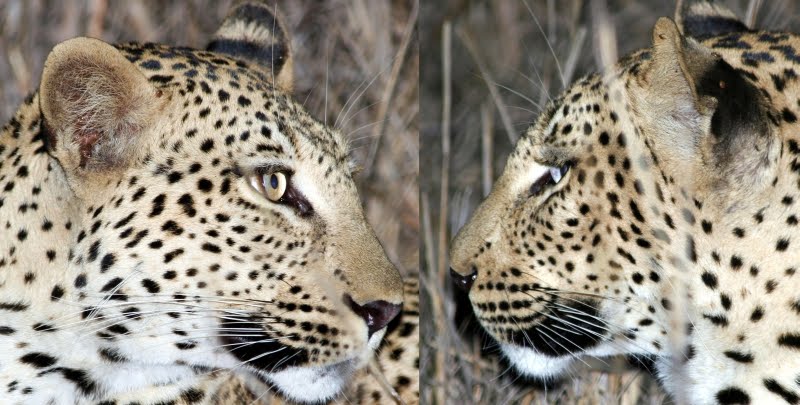
The leopard population has fared a lot better in the area this last year and both the Hlab’nkunzi and Metsi females are still doing a good job of raising their respective youngsters. Hlab’nkunzi seems to be coming over to Idube more frequently now and was even seen in the lodge one evening!
Mabirri’s second daughter is now independent and has been named Tlangisa (playful), she has still to establish herself in a territory but with no dominant female on Idube permanently at the moment we are hoping she moves in here! Mabirri herself has been seen mating with the Kashane male in the time around Christmas and we hope she successfully conceived – if so, cubs are expected before Easter! The Xinzele male was seen mating with the Xikavi female prior to that, so far Xikavi has mated many times with no success, perhaps this time we will get to see cubs…
The Xindlevhana male is becoming a more regular sighting around Idube, and seems to be becoming more tolerant of the vehicles in his old age! The Mashiabanj male has also been attracting the interest of a female leopard in the north – possibly Hippo Dam female, this however leads me to wonder, where is the Tegwaan male? The answer to that seems to lie with the Tai dam female who was seen being very vocal up in the North-Western corner and I would guess that Tegwaan has been spending time up there with her.
The elephant herds were scarce at the start of December but started to move back into the area towards the end of the month and should remain in place for a while as the marula trees start to drop their fruit.
The wild dog pack was seen on a number of occasions the last few weeks but not as regularly as some previous months, with the remaining pup now almost indistinguishable in size from the adults the pack covers more distance than before. Hopefully they will have another litter of pups this year, perhaps in our traversing area this time…
Cheetah sightings were reported last in early December, the long grass and frequent rain making it very hard for anybody to follow up efficiently, a couple of impala carcasses have been found after the vultures showed the way, these could have been cheetah kills but nobody is 100% sure.
Two large herds of buffalo have been frequenting the area recently, along with the regular bachelor groups seen along the river, the Mapogo male lions have been trying their luck hunting the large herds in the south but have not been particularly successful, coming off second best on more than one occasion!
The highlights videos for December and Jan will be available soon on youtube
(http://www.youtube.com/iduberobtheranger ) and our facebook page (http://www.facebook.com/idubelodge ) now features live picture updates during the drives so you can see what we see, as we see it!
That’s all for now!
Happy 2011!
Best Wishes,
Rob The Ranger

Thursday, January 6, 2011

Monday, December 6, 2010
Rangers Newsletter
We are moving into the holiday season and it is hard to believe that 2010 is almost over! It is also the rainy season (finally) and the rains the last few weeks have transformed the landscape from the combination of dry brush and burned areas that we were seeing up until the beginning of November, into a vibrant green quilt of lush vegetation. This in turn has triggered the Impala lambing season – giving the local predators ample opportunity to feed.
Almost all the migratory bird species have returned to the reserve and the sounds of the various cuckoos and the woodland kingfishers provide the soundtrack to the beautiful sunny days.
Almost all the migratory bird species have returned to the reserve and the sounds of the various cuckoos and the woodland kingfishers provide the soundtrack to the beautiful sunny days.
As always, the bush has provided plenty of highlights over the past few weeks – especially now the grass is green and many of the grazers have increased in numbers, in fact the big buffalo herd spent most of the last week of November close to the lodge.
There have been plenty of elephant herds in the area feeding on all the new growth. Although elephants do not have a particular birthing season there is usually a peak in the summer months and there are now quite a few small calves to be seen in the herds.
Small herds of zebra have been found on he new grass in most of the areas that burned during the dry season, these numbers will start to dwindle as the grass gets longer so we are making the most of the sightings whilst we can!
The pack of painted hunting dogs (African wild dogs) was in and out of the area, down to 7 individuals now , only 1 of the original 8 pups is still alive. This high pup mortality is one of the reasons these beautiful predators are so rare.
The 2 male cheetah were seen regularly, the male with the fat bottom lip "Makhumisa" was seen most often and was seen feeding on kills a couple of times as well (one of which he had to leave to the vultures)
Leopards are always a favourite, both for the guests and the staff, and there was no shortage of sightings in the recent weeks:
Xikavi female leopard seems to have fallen for the young male, Xinzele, and she was seen on a couple of separate occasions trying to seduce him. Xinzele so far has resisted her advances probably because, despite his large size, he is still very young and unsure of what exactly is required of him in such a situation!
Hlab'nkunzi female leopard killed an impala under the power lines that mark the boundary of Idube and Dulini properties where she brought her two 10 month old cubs to feed. This sighting became interesting early on the second morning of the sighting when she took offence to Rob's camera and jumped off the kill to pitch a snarling hissing fit at the door of the vehicle. this goes to show that even our most relaxed leopards can have an off day and we should never take any of the wildlife here for granted! Watch what happened HERE
She was seen again in the afternoon of the same day and had returned to her normal nonchalant disposition! The two youngsters were often seen apart from their mother and are still learning to perfect their hunting skills, one afternoon drive saw them chasing banded mongoose, eventually catching and killing one. See one of the cubs with the mongoose HERE
Metsi female leopard and her cubs are seen more regularly now and the cubs are much more relaxed than they were to start with, especially when there is a kill around. The family was seen on a couple of kills and seem to be doing very well.
Mabirri and her daughter have finally separated but as yet neither have moved up towards the central territory vacated by Makubela earlier in the year. Both these female leopards are successful hunters and it seems that the younger of the two is also good at hoisting her kills out of reach of hyenas - something she did not learn from her mother!
An unidentified leopard - a young male - was found on the southern portion of Idube property. He hid from the approaching vehicle inside a termite mound the first couple of times he was seen and was later seen hurrying away from the same position. His tracks led us to Mabirri one morning and there had obviously been some animosity between the two as she was nursing a nasty gash in one of her back legs.
The other male leopards - Tegwaan, Kashane and Mashiabanj have all been spotted recently too, both Tegwaan and Kashane have been spending time on Idube property and with Xindlevhana also coming onto Idube on occasion (we think it was him who killed a nyala close to the laundry and dragged it all the way down into the Makubela donga close to the boundary) this new male has his work cut out for him...
The lion population can often be a disappointment – spending most of their time sleeping – but this last few weeks they have been the stars of the show!
The 4 Mapogo male lions killed a big bull buffalo north of the river there was plenty of interaction between these four big lions and also one instance of them roaring whilst surrounding the vehicle – Brilliant! The kill was finished in under 48 hours. See them roaring at this kill HERE
The Ximunghwe pride had a kudu kill at the same time and two of the new cubs ( 1 male + 1 female) were out in the open providing lots of entertainment. One of the Mapogo joined them to finish off the scraps after leaving the buffalo kill.
The Ottawa lions also caught a buffalo north of the river and were joined by one of the Mapogo - this sighting coincided with a large amount of rainfall! The male (Makulu) left during the rain and was seen the next morning with the Ximunghwe lionesses.
The Ximunghwe pride also killed a young giraffe and the cubs were brought out to this kill too, there was also a wildebeest kill for the pride and the cubs were there too, Mapogo male Mr. T, notorious for killing cubs (even those sired by other Mapogo) joined the pride at the wildebeest kill and the cubs were not seen the next day – the tracks suggest that their mother moved them elsewhere but at the time of writing I am unsure of exactly what may have happened to them...
The Mapogo lions were back in action after a few days of patrolling – they killed a young hippo! This kill was out in an open clearing so there were some great photo opportunities!
It seems that the hippo had tried to take refuge in a small waterhole but it was too shallow and the lions dragged him out again... View the video of them feeding HERE
The Ottawa lions were found pushing their boundaries to the limit when they turned up in the South of the reserve, usually a place we would expect to find the Ximunghwe pride! The pride came across the large herd of buffalo that morning and, after a few half-hearted attempts to chase them, retired to some shade close to Marula Dam and just watched the herd's movements throughout the day.
Returning to the area in the afternoon we found both the lions and the buffalo in the same place they had been left earlier, the lions were watching the buffalo as they moved down to the dam to drink. Suddenly something spooked the buffalo herd and they all started running straight past where the lions were waiting... Bang the lions had themselves a buffalo calf! All this took place in front of both the Idube game drives! As we watched the pride start to open up their prey, the herd returned. Charging into the lions the buffalo herd scattered the pride and we saw that the calf was still alive! The lions did not give up and returned to their prize, prompting another charge from the herd, this time the calf got up and ran with the adults with the lions in hot pursuit! This scene repeated itself a few times until the herd ran through the dam – the calf was slowed by it's injuries and left too far behind the rest and the lions eventually got their meal. All in all an awesome sighting and a good point to end this update on! View the video HERE
Until next time!
Best wishes,
Rob the Ranger
Sunday, November 21, 2010
Idube Safari Highlights #68: 04 - 06 October 2010
All the highlights videos will be posted on this blog in the future!
Saturday, November 20, 2010
Update From The Bush
Welcome to our (not so) regular blog update!
The rains the last few weeks have transformed the landscape from the combination of dry brush and burned areas into a vibrant green quilt of lush vegetation triggering the Impala lambing season. The sweet new grass is perfect for the grazers and most of the bushes and trees have new leaves for the browsers to feed on, greater concentrations of the herbivores attracts more predator activity so the sightings around Idube have been phenomenal (no change there then)!
With the surrounding bush having recovered the animals that frequent the lodge grounds have not had to rely on the lawn for sustenance and that too is back to its glorious summer state - the warthogs and nyalas are still around just not eating as much of the lawn as before. Our frequent nocturnal elephant raids have also stopped now the food is readily available elsewhere.
Special sightings out on drive have included:
The rains the last few weeks have transformed the landscape from the combination of dry brush and burned areas into a vibrant green quilt of lush vegetation triggering the Impala lambing season. The sweet new grass is perfect for the grazers and most of the bushes and trees have new leaves for the browsers to feed on, greater concentrations of the herbivores attracts more predator activity so the sightings around Idube have been phenomenal (no change there then)!
With the surrounding bush having recovered the animals that frequent the lodge grounds have not had to rely on the lawn for sustenance and that too is back to its glorious summer state - the warthogs and nyalas are still around just not eating as much of the lawn as before. Our frequent nocturnal elephant raids have also stopped now the food is readily available elsewhere.
Special sightings out on drive have included:
- The 4 Mapogo male lions with a buffalo kill north of the river - plenty of interaction between these four big lions and also one instance of them roaring whilst surrounding the vehicle - Brilliant!
- The Ottawa lions also caught a buffalo north of the river and were joined by one of the Mapogo - this sighting coincided with a large amount of rainfall...
- The Ximunghwe pride had a kudu kill and two of the new cubs - 1 male + 1 female - were out in the open providing lots of entertainment.
- The Ximunghwes also killed a young giraffe and the cubs were brought out again.
- The pack of painted hunting dogs (African wild dogs) was in and out of the area, down to 7 individuals now , only 1 of the 8 pups is still alive. This high pup mortality is one of the reasons these beautiful predators are so rare.
- The 2 male cheetah were seen regularly, the male with the fat bottom lip "Makhumisa" was seen most often and was seen feeding on kills a couple of times as well.
- Hlab'nkunzi female leopard killed an impala under the power lines that mark the boundary of Idube and Dulini properties where she brought her two 10 month old cubs to feed. This sighting became interesting early on the second morning of the sighting when she took offence to Rob's camera and jumped off the kill to pitch a snarling hissing fit at the door of the vehicle. this goes to show that even our most relaxed leopards can have an off day and we should never take any of the wildlife here for granted!
- Xikavi female leopard seems to have fallen for the young male, Xinzele, and she was seen on a couple of separate occasions trying to seduce him. Xinzele so far has resisted her advances probably because, despite his large size, he is still very young and unsure of what exactly is required of him in such a situation!
- Metsi female leopard and her cubs are seen more regularly now and the cubs are much more relaxed than they were to start with.
- Mabirri and her daughter have finally separated but as yet neither have moved up towards the central territory vacated by Makubela earlier in the year. Both these female leopards are succesful hunters and it seems that the younger of the two is also good at hoisting her kills out of reach of hyenas - something she did not learn from her mother!
- The other male leopards - Tegwaan, Kashane and Mashiabanj have all been spotted recently too.
- An unidentified leopard - a young male - was found on the southern portion of Idube property. He hid from the approaching vehicle inside a termite mound the first couple of times he was seen and was later seen hurrying away from the same position. His tracks led us to Mabirri one morning and there had obviously been some animosity between the two as she was nursing a nasty gash in one of her back legs.
- The big buffalo herd has not been seen much since the fires, now the grass is green it is likely that they will return, the small bachelor groups are still encountered regularly along the river (where the lions keep picking them off, one by one!)
- Elephants are widespread across the area, more so now with all the new growth. One herd chased Hlab'nkunzi and cubs off a kill as they passed through the area. This behaviour is common as elephants have a strong dislike for all predators - more so when they can smell blood.
There has been plenty more happenings and as and when we can we will keep you all updated...
Best wishes
The Idube Team
Monday, October 11, 2010
Western Sector Leopard ID Kit (Current)
Western Sector Leopard ID Kit
Females
Mabirri

Relaxed, seen over most of the southern parts of the Western sector
Spots: 2:2
Born: Dec 2001
Mother: Makwela
Father: Wallingford Male
Litter-mates: Ravenscourt (Sindile) and Tsonga Females
Young: Metsi b. Oct 2006, Female b. Mar 2009
Mabirri Cub 2009

Spots: 3:4
Born: April 2009
Mother: Mabirri
Father: Possibly Tulamanzi
Metsi

Relaxed, mostly seen in SW areas of the Western sector
Spots: 4:2
Born: Oct 2006
Mother: Mabirri
Father: Possibly Kinky Tail
Young: Currently has a litter of 2 cubs b. May 2010
Ravenscourt/Sindile

Territorial on Singita, P.5, Exeter South and Idube North
Spots: 2:3 when younger, now looks more like 3:3 (larger spot on right cheek separated)
Born: Dec 2001
Mother: Makwela
Father: Wallingford
Litter-mates: Mabirri and Tsonga Females
Young: Ravenscourt/Ximobonyane Male b. Mar 2006
Xinzele Male b. Nov 2007
Young male b. April/May 2009 (were 2 one d. June 2010)
Hlab'nkunzi

Relaxed, taken over her mother's territory, seen all over the central Western sector
Spots: 3:2
Born: May 2006
Mother: Makwela
Father: Wallingford Male
Hlab'nkunzi's Cubs 2010

Spots: 1) 3:3 2) 3:3 with a 2:1 spot between the whisker line
Born: Jan 2010
Mother: Hlab'nkunzi
Father: Tegwaan
Shangwa
 Relaxed - Has recently been pushed more into Ottawa by the Ravenscourt female
 Spots: 3:4
Born: Nov 1998
Mother: Tavangumi
Father: Prob. Mbombi
Young: Makubela Female and Tegwaan Male b. Dec 2003
Xikavi and Nchila Females b. Sep/Oct 2005
Blue Eyed Female b. Nov 2008
Blue Eyed Female

Seen mostly north of the Sand river on Exeter
Spots: 3:3
Born: Nov/Dec 2008
Mother: Shangwa
Father: Xindlevhana
Xikavi
Relaxed, seen on Exeter, Inyati, Dulini and Idube
Spots: 3:3
Born: Sep 2005
Mother: Shangwa
Father: Ottawa
Littermates: Nchila Female
Tai Dam
 Semi-relaxed, seen infrequently in the northern area
 Spots: 1:1
Born: 1993
Parents: Unknown
Young: Female (Kloof) b. 2007, Male b.2009
Dam 3
 Often very shy, seldom seen, often confused with Hippo Dam
 Spots: 3:3
Born: Unknown
Mother: Possibly Hippo Dam
Father: Probably Wallingford
Hippo Dam

Shy, seldom seen, often confused with Dam 3, seen on Inyati property
Spots: ?:3
Born: 199?
Parents: Unknown
Young: Possibly the mother of Treetops Male and Dam3 Female, Recently confirmed as themother of a young female b.late 2009
Young Female (Hippo Dam Daughter)

Spots: 3:4
Born: Late 2009
Mother: Hippo Dam
Father: Tegwaan
Males
Tegwaan

Relaxed, dominant over most of the central and northern parts of the western sector
Spots: 3:3 (with two distinct spots between the whisker line on the left cheek)
Born: Dec 2003
Mother: Shangwa
Father: Wallingford
Littermates: Makubela Female
Kashane (Lisbon)Male
 Relaxed. Mostly seen on Savanna and Idube, tail has a distinct wave in it. Moved onto Sabi Sabi (Lisbon property) after independence, moved north to Castleton and Savanna in 2009
 Spots: 3:3
Born: 2005
Mother: Kapen Female of Mala Mala
Father: Hlaruini Male
Xinzele

Relaxed. Has been moving around the river between Exeter, Ottawa and Singita since becoming independent of his mother mid 2009. He is often seen with his mother and her new litter
Spots: 3:3
Born: Nov 2007
Mother: Ravenscourt
Father: Possibly Xindlevhana or Ottawa
Xindlevhana

Skittish but relaxed at night. Big older male with a chunk missing from his right ear, seen
since 2007 on Idube and Exeter, May have been referred to as the Robson male at some point
Spots: 3:3
Origins as yet unconfirmed
Mashiabanj Male

Has been seen often in the West since November 2009
Was first called Mombosa Male
Was first called Mombosa Male
Spots: 3:4
Born: Jan 2008
Mother: Kikelezi/Xidulu female of Mala Mala/Londolozi
Father: Camp Pan Male
Son Of Ravenscourt

Seen with his mother and older brother (Xinzele) on visits to the west
Spots: 4:3
Born: Around April/May 2009
Mother: Ravenscourt/Sindile
Father: Xindlevhana
Littermates: Male 3:3 spot pattern, Died June 2010
Son Of Tai Dam

Still dependant, seen in NW mostly
Spots: 1:1 (2 spots between whisker line each side)
Born: Mid – Late 2009
Mother: Tai Dam
Father: Tegwaan
Photos: JF Poudron, R Brightman, L Pearson, R Vamplew
Wednesday, October 6, 2010
The Month That Was...
Hello everybody, again apologies for the lack of a blog last week due to internet problems, this week we have for you the newsletter for the month of September:
As we move into October the temperature rises and the chance of rain increases, with this we should see an increase in the numbers of migratory birds as the insect life increases in accordance with the warm moist conditions. The rain should bring welcome relief to the landscape that is showing the first flushes of spring but needs some water to sustain this new growth. The impala lambing season is fast approaching, but this is also dependant on the rainfall – good rains mean that we may see the first few lambs as early as the end of this month, dry conditions could delay the season until as late as December.
The warmer conditions mean we have already changed to our summertime schedule – morning drive departing at 5:30AM and afternoon drive at 4:30PM, this means that our guests can relax during the heat of the day.
The past month has provided plenty of excitement during the game activities – both during drives and the walks.
The morning nature walks usually involve a leisurely stroll in the wilderness learning about tracks, droppings, plants and insects but recently they have been characterized by encounters with more substantial creatures. The warmer days mean animals are coming to water more often and Scotia dam is a focal point for the fauna around the lodge, this means that walks to the dam have come across:
Elephants bathing and swimming on a regular basis
Sparring bull elephants
Lions relaxing on more than one occasion
Giraffe coming down to drink
Hippo in the dam, often giving warning displays
Large numbers of general game – waterbuck, impala, wildebeest, nyala etc
One morning there was a big male lion from the Mapogo coalition that caused a herd of swimming elephants to panic and stampede from the water (luckily away from the walking party)
Predator activity around the lodge seems to have increased, with regular sightings of large carnivores – Lion, leopard and African hunting dog were all seen in the lodge grounds and Hyena tracks were spotted on an almost daily basis. The dogs caught a duiker in front of the lodge one morning before chasing impala through the premises, Hyena caught a nyala in the staff area one night and just this morning the lions caught a Nyala outside room 4 whilst the guests were out on drive, none of this is a worry as the predators mostly use the lodge during times of little human activity - they do their best to avoid us.
Out on drive there was also plenty of excitement, starting right at the beginning of the month when the Ottawa lion pride brought down a buffalo north of the river. The buffalo did note take kindly to being attacked and fought back fiercely, mortally wounding the old half ear lioness in the process. The rest of the pride continued the fight ignoring their fallen relative, eventually killing the buffalo. The wounded female retired to the cover of a nearby bush and later died. The rest of the pride fed well and moved on, a week later they showed that the loss of the old lioness had not affected them badly as the brought down another big buffalo south of the river. Later in the month we received a report from our neighbours that they had made another buffalo kill, hopefully the pride can continue to be this successful and stay strong.
Buffalo did not fare so well as the Mapogo male lions also were hungry this month! The older male brought down a young buffalo where he fad until one of the other coalition members came and replaced him, later in the month 2 of the males brought down a huge old bull buffalo which evidently stumbled upon the pair sleeping. Eventually the 2 males were joined by a lioness from the Tsalala pride 9the one with no tail) and one of the sub adult females of the same pride also arrived some time later. Reportedly the Tsalalas had come across the Ottawa pride and a fight had erupted, scattering the Tsalalas, which is probably the reason that only two of the pride members were present.
The Ximunghwe pride was also regularly seen, some of the lionesses were mating with individual males from the Mapogo coalition but two of them were often seen alone, it was hoped the two single lionesses had split to give birth. This turned out to be the case as both den sites were located and there at least 4 new cubs between the two females.
The leopard population has also been providing great sightings –
Mabirri’s youngster caught and at a guinea fowl next to the vehicle early in the month and she was seen with her mother on other kills quite regularly. At one point it seemed that she was going to be pushed away by Mabirri after thy had been seen being aggressive towards one another, Mabirri was also seen following the trail of the Kashane male one morning and we thought that perhaps she was ready to mate, all this turned out to be wrong and mother and daughter were seen together frequently after all this occurred.
Metsi female has been bringing her cubs out more frequently and we are finally getting to see the two of them quite closely, before long they will be as relaxed as Hlab’nkunzi’s youngsters.
The two Hlab’nkunzi youngsters were seen regularly both with the mother and without, they ate well throughout the month and we were lucky enough to be able to watch them attempting their first kill – a young bushbuck. Hlab’nkunzi herself caught the bushbuck but let it go, still alive in front of the youngsters. The inexperienced young leopards tried hard but could not get it right and I think the poor bushbuck just gave up and died of shock in the end. We also saw some attempts to stalk by the young leopards, the most successful attempt was on a nyala bull – one cub got very close before being seen. Less successful, but more amusing, were the attempts to stalk rhino and giraffe!
Also seen were the regular male leopards – Kashane, Tegwaan, Mashiabanj, Xinzele and surprisingly a sighting of a relaxed Xindlevhana, other females seen included Ravenscourt, Xikavi, Dam 3 (pregnant), Hippo Dam and daughter and Shangwa’s daughter.
The African wild dogs were seen regularly, unfortunately one of the pups was abandoned during the month bringing the total number down to 9, we did see them hunting and feeding regularly, apart from the hunts around the lodge mentioned earlier, averaging a kill per day. During the time that the pack was in the area they also managed to harass the male lion known as Makulu Mapogo, chase 2 leopards up a tree (Hippo dam and daughter) and chase rhino around!
2 different male cheetah were seen regularly and they also fed well and were seen mostly sleeping off big meals, one of them did complete a successful chase in front of us a couple of mornings ago, catching a young steenbok.
Rhino have been plentiful all over the traversing area with a large concentration around Ebony dam, just to the north of the lodge.
Elephants were plentiful as usual and some quite big herds were seen along the Sand River during the month. There have also been some massive bulls around the area but no big tuskers at the moment.
Hippo have been seen out of the water frequently recently - not a surprise at night but more unusual in the day. The hippo with the battle scars is still healing well and it is he who has been seen out of the water in daylight most often.
Large-spotted genets have been found often in the evenings on the burned areas as well as the white-tailed mongoose. Lesser bushbaby have also been spotted regularly, including one which seemed to be teasing a leopard (Mabirri’s daughter) by leaping from tree to tree above her and calling, just out of reach!
There was much more than this going on, as usual these are just a few of the many wonderful sightings that we have had here.
Until next time,
Best wishes
Rob The Ranger
As we move into October the temperature rises and the chance of rain increases, with this we should see an increase in the numbers of migratory birds as the insect life increases in accordance with the warm moist conditions. The rain should bring welcome relief to the landscape that is showing the first flushes of spring but needs some water to sustain this new growth. The impala lambing season is fast approaching, but this is also dependant on the rainfall – good rains mean that we may see the first few lambs as early as the end of this month, dry conditions could delay the season until as late as December.
The warmer conditions mean we have already changed to our summertime schedule – morning drive departing at 5:30AM and afternoon drive at 4:30PM, this means that our guests can relax during the heat of the day.
The past month has provided plenty of excitement during the game activities – both during drives and the walks.
The morning nature walks usually involve a leisurely stroll in the wilderness learning about tracks, droppings, plants and insects but recently they have been characterized by encounters with more substantial creatures. The warmer days mean animals are coming to water more often and Scotia dam is a focal point for the fauna around the lodge, this means that walks to the dam have come across:
Elephants bathing and swimming on a regular basis
Sparring bull elephants
Lions relaxing on more than one occasion
Giraffe coming down to drink
Hippo in the dam, often giving warning displays
Large numbers of general game – waterbuck, impala, wildebeest, nyala etc
One morning there was a big male lion from the Mapogo coalition that caused a herd of swimming elephants to panic and stampede from the water (luckily away from the walking party)
Predator activity around the lodge seems to have increased, with regular sightings of large carnivores – Lion, leopard and African hunting dog were all seen in the lodge grounds and Hyena tracks were spotted on an almost daily basis. The dogs caught a duiker in front of the lodge one morning before chasing impala through the premises, Hyena caught a nyala in the staff area one night and just this morning the lions caught a Nyala outside room 4 whilst the guests were out on drive, none of this is a worry as the predators mostly use the lodge during times of little human activity - they do their best to avoid us.
Out on drive there was also plenty of excitement, starting right at the beginning of the month when the Ottawa lion pride brought down a buffalo north of the river. The buffalo did note take kindly to being attacked and fought back fiercely, mortally wounding the old half ear lioness in the process. The rest of the pride continued the fight ignoring their fallen relative, eventually killing the buffalo. The wounded female retired to the cover of a nearby bush and later died. The rest of the pride fed well and moved on, a week later they showed that the loss of the old lioness had not affected them badly as the brought down another big buffalo south of the river. Later in the month we received a report from our neighbours that they had made another buffalo kill, hopefully the pride can continue to be this successful and stay strong.
Buffalo did not fare so well as the Mapogo male lions also were hungry this month! The older male brought down a young buffalo where he fad until one of the other coalition members came and replaced him, later in the month 2 of the males brought down a huge old bull buffalo which evidently stumbled upon the pair sleeping. Eventually the 2 males were joined by a lioness from the Tsalala pride 9the one with no tail) and one of the sub adult females of the same pride also arrived some time later. Reportedly the Tsalalas had come across the Ottawa pride and a fight had erupted, scattering the Tsalalas, which is probably the reason that only two of the pride members were present.
The Ximunghwe pride was also regularly seen, some of the lionesses were mating with individual males from the Mapogo coalition but two of them were often seen alone, it was hoped the two single lionesses had split to give birth. This turned out to be the case as both den sites were located and there at least 4 new cubs between the two females.
The leopard population has also been providing great sightings –
Mabirri’s youngster caught and at a guinea fowl next to the vehicle early in the month and she was seen with her mother on other kills quite regularly. At one point it seemed that she was going to be pushed away by Mabirri after thy had been seen being aggressive towards one another, Mabirri was also seen following the trail of the Kashane male one morning and we thought that perhaps she was ready to mate, all this turned out to be wrong and mother and daughter were seen together frequently after all this occurred.
Metsi female has been bringing her cubs out more frequently and we are finally getting to see the two of them quite closely, before long they will be as relaxed as Hlab’nkunzi’s youngsters.
The two Hlab’nkunzi youngsters were seen regularly both with the mother and without, they ate well throughout the month and we were lucky enough to be able to watch them attempting their first kill – a young bushbuck. Hlab’nkunzi herself caught the bushbuck but let it go, still alive in front of the youngsters. The inexperienced young leopards tried hard but could not get it right and I think the poor bushbuck just gave up and died of shock in the end. We also saw some attempts to stalk by the young leopards, the most successful attempt was on a nyala bull – one cub got very close before being seen. Less successful, but more amusing, were the attempts to stalk rhino and giraffe!
Also seen were the regular male leopards – Kashane, Tegwaan, Mashiabanj, Xinzele and surprisingly a sighting of a relaxed Xindlevhana, other females seen included Ravenscourt, Xikavi, Dam 3 (pregnant), Hippo Dam and daughter and Shangwa’s daughter.
The African wild dogs were seen regularly, unfortunately one of the pups was abandoned during the month bringing the total number down to 9, we did see them hunting and feeding regularly, apart from the hunts around the lodge mentioned earlier, averaging a kill per day. During the time that the pack was in the area they also managed to harass the male lion known as Makulu Mapogo, chase 2 leopards up a tree (Hippo dam and daughter) and chase rhino around!
2 different male cheetah were seen regularly and they also fed well and were seen mostly sleeping off big meals, one of them did complete a successful chase in front of us a couple of mornings ago, catching a young steenbok.
Rhino have been plentiful all over the traversing area with a large concentration around Ebony dam, just to the north of the lodge.
Elephants were plentiful as usual and some quite big herds were seen along the Sand River during the month. There have also been some massive bulls around the area but no big tuskers at the moment.
Hippo have been seen out of the water frequently recently - not a surprise at night but more unusual in the day. The hippo with the battle scars is still healing well and it is he who has been seen out of the water in daylight most often.
Large-spotted genets have been found often in the evenings on the burned areas as well as the white-tailed mongoose. Lesser bushbaby have also been spotted regularly, including one which seemed to be teasing a leopard (Mabirri’s daughter) by leaping from tree to tree above her and calling, just out of reach!
There was much more than this going on, as usual these are just a few of the many wonderful sightings that we have had here.
Until next time,
Best wishes
Rob The Ranger
Sunday, September 19, 2010
The Week(s) That (Were).....
We start firstly with an apology for our lack of updates the past few weeks, this post will be a recap of the major points since the last post, and from here we can get back to the weekly updates.
The biggest talking point has to be the fire that swept over the property at the end of August clearing out the majority of the tangled dead undergrowth. A very large area was burned, right up to the lodge grounds, that whole area is now turning green and the grazing animals are appearing in numbers. The first rains of the season are not far away and when they arrive the nutrients from the ash will soak into the soil and help the regrowth. With the majority of Idube property burnt this new growth is concentrating the herbivores around the loge, this in turn brings the predators and just this week we have seen leopard, lion and hyena in the lodge grounds, the hyena actually made a kill close to the staff rooms this morning!
The new buildings are progressing rapidly, the structure is basically complete, the doors and windows are in place and the wooden decks are progressing well, plunge pools are being built by each chalet.
The problem of elephants coming into the lodge grounds seems to have stopped with a combination of new fencing, the fire and the arrival of spring it seems the eles are content to find food elsewhere for now.
The game drives have been fantastic, as always, and the main updates are as follows:
The biggest talking point has to be the fire that swept over the property at the end of August clearing out the majority of the tangled dead undergrowth. A very large area was burned, right up to the lodge grounds, that whole area is now turning green and the grazing animals are appearing in numbers. The first rains of the season are not far away and when they arrive the nutrients from the ash will soak into the soil and help the regrowth. With the majority of Idube property burnt this new growth is concentrating the herbivores around the loge, this in turn brings the predators and just this week we have seen leopard, lion and hyena in the lodge grounds, the hyena actually made a kill close to the staff rooms this morning!
The new buildings are progressing rapidly, the structure is basically complete, the doors and windows are in place and the wooden decks are progressing well, plunge pools are being built by each chalet.
The problem of elephants coming into the lodge grounds seems to have stopped with a combination of new fencing, the fire and the arrival of spring it seems the eles are content to find food elsewhere for now.
The game drives have been fantastic, as always, and the main updates are as follows:
- The older Ottawa lioness with the half-ear was killed by a buffalo whilst assisting the pride in making the kill, the pride has not been too badly affected by the loss and less than a week later brought down another buffalo. The sub-adults in the pride are accomplished hunters and the group should not go hungry, the other adult female is the mother of the younger cubs so her presence should guide the group well in the future. (Remember the Ximunghwe pride was reduced to one lioness and some youngsters a couple of years ago and they are a strong pride now).
- The 4 Mapogos have spent most of their time in the western sector, between the Ximunghwe pride and the Ottawa pride, most recently MrT and Snip-tail have been mating with two Ximungwe lionesses
- The Ximunghwe pride lost the last two cubs, most likely to the claws of MrT, since then 2 of the lionesses have split from the group - hopefully to give birth! Any cuybs born now would fall under the protection of MrT as he is now fully reintegrated into the Coalition
- Buffalo have not been faring too well as the lions have taken down at least 4 adults and one youngster in the last few weeks.
- Metsi female leopard and her cubs have been seen more regularly, the cubs are still shy but tolerate the vehicles at a kill
- Hlab'nkunzi female leopard and her two cubs have been a regular sight and despite reports of one of the cubs being killed, all three leopards were seen at a kill recently.
- Hlab'nkunzi herself seems to have had an altercation with Metsi and was last seen with injuries to the head and neck, it seems they were just flesh wounds and she should recover easily
- Mabirri female leopard and her cub have been spending less time together and we may have seen the last kill they share last week. After the impala kill was finished the next time we saw the two together it looked as if Mabirri was chasing the Daughter away. Soon afterwards Mabirri was seen following the trail of the Kashane male leopard - this probably means she is looking to mate soon.
- Mabirri's cub has been making her own kills fairly regularly and should cope well with independence, one sign that she is still young is the fact that she was very intent on catching a bush-baby the other night - fun to watch but very frustrating for the young leopard as she found the agility of the small primate surprising!
- Xikavi Female leopard was seen throwing herself at the Xinzele male, he was looking most confused as at only 3 years old he is a bit young for all that attention. The next day he was seen alone, it seems Xikavi had gone in search of a male who knew what to do...
- Tegwaan male leopard has been increasing his patrolling area and managed to cover the majority of the Western sector in 24 hours - moving from the south western corner up to the north western corner and ending inside Idube which is on the center of the Eastern boundary!
- A fairly relaxed young female leopard has been seen frequently on the northern banks of the Sand river, her mother runs of at first sign of a vehicle so we have no positive ID as yet, she is the daughter of either Hippo Dam or Dam 3 depending on which one was mating with Tegwaan last month....
- Kashane Male leopard has been seen often on Idube and Savanna properties and has taken a liking to warthog meat - he killed one in the South and then another one in the wetland at the back of the lodge only a few days later.
- Two male cheetah have been seen regularly, all over the traversing area. At one point the two crossed through the same area only a few hundred meters apart, in opposite directions but neither one noticed the other.
- The pack of 10 painted hunting dogs were seen regularly and hunted extremely successfully during the time thy were in our traversing area - they killed at least onca a day, sometimes twice, the pups are already 2/3 of the size of the adults and if they continue to eat as well as they have been will be as big as the parents by the end of the year!
- Despite the spike in rhino poaching in the country this year our rhino population is unaffected and are seen regularly, here in the Sands the constant presence of the counter-poaching teams and the number of rangers out on drive keeps the animals safe from poachers.
- The elephants have been extremely happy with the arrival of spring and all the extra nutrients appearing, this does mean that the herds are spread out throughout the area and not concentrated around the water sources anymore, we still see them regularly, we just have to track a bit harder!
There was obviously a lot more going on than the points mentioned above, these are just the highlights- next week we will give you a thorough update on the sightings we see between now and then!
Best wishes,
The Idube Team
Subscribe to:
Posts (Atom)