
Sent from my BlackBerry® wireless device

Sunday, September 18, 2011
Update from the afternoon drive
Sent from my BlackBerry® wireless device

Sightings AM drive 18 Sept 2011
Xinzele Male Leopard
Tlangisa Female Leopard
Ximunghwe Pride 3 females 5 cubs
Elephants
Buffalo
Giraffe
Hippo
Crocodile
Ximunghwe lioness with the older 2 cubs
Reports are that 2 of the youngest Ximunghwe cubs may have been killed by hyena as they were not seen with the rest of the group this morning. There were hyena tracks in the area that the lioness had left them previously.
Sent from my BlackBerry® wireless device
Tlangisa Female Leopard
Ximunghwe Pride 3 females 5 cubs
Elephants
Buffalo
Giraffe
Hippo
Crocodile
Ximunghwe lioness with the older 2 cubs
Reports are that 2 of the youngest Ximunghwe cubs may have been killed by hyena as they were not seen with the rest of the group this morning. There were hyena tracks in the area that the lioness had left them previously.
Sent from my BlackBerry® wireless device
Mobile Postings
Hello Everybody,
You may have noticed that our blog is not updated as often as it should be. That is about to change! Regular updates will now be sent to the blog using the magic of mobile technology! Look out for pictures and updates direct from the game drives and keep up to date with all that is happening at Idube!
Sent from my BlackBerry® wireless device
You may have noticed that our blog is not updated as often as it should be. That is about to change! Regular updates will now be sent to the blog using the magic of mobile technology! Look out for pictures and updates direct from the game drives and keep up to date with all that is happening at Idube!
Sent from my BlackBerry® wireless device
Thursday, June 9, 2011
Latest Rangers News
Winter is slowly creeping up on us as we move into June. The morning drives are accompanied by warm blankets and hot water bottles, which are quickly discarded as the sun rises and the day quickly warms up. Daytime temperatures are still in the 25-30C region. The cooler weather during the game drive times often means increased animal activity and the sightings reflect that fact.
The last few weeks sightings have included many high points, the most obvious being the activity around the wild dog den site, the 8 pups are getting big now and are outside playing a lot more often than when they were smaller. The adults are seen hunting every day, sometimes twice, usually successfully.
One such hunt ended up with the dogs running in front of the lodge and catching an impala on the firebreak. Another hunt ended with the pack running past Andries, Titus and the guests at a drinks break and killing an impala about 50m away.
A very special sighting was that of an, as yet, unidentified female leopard which was found on Idube property one morning. Andries came across this individual one morning on the bank of the Ximobonyane drainage line. Hidden in a recess behind a root system it soon became clear that she was nursing two tiny cubs, only a few days old. The female is a slightly nervous individual that we sometimes come across on the main road, usually running away from us. She was remarkably tolerant of both Andries and me as we came to view her and the youngsters, she eventually moved the cubs to a thicker spot along the riverbank, and we have not been able to see them since.
The Xikavi female leopard was reported vas being seen carrying a small cub too, she was also seen flirting with the Xinzele male a week or so later so we are not sure if this was to make Xinzele think the cub is his or if she has lost it.
The Hlab’nkunzi female was also seen in the company of Xinzele for a few days; her attempts to initiate mating seemed to be unsuccessful though.
The Metsi female was seen with her two 1yr old sons in the south with a kill, the kill was eventually stolen by hyenas, and the trio moved off. Metsi then left the two boys behind as she went off to hunt again – this time in an accessible place so the two boys have been seen more often these last few weeks than the last six months!
The Shangwa female also returned to our area for the first time in around 8 months, she brought her young son with her who was a little bit wary of the cars at first but soon relaxed when he saw mum was fine. The sighting that we saw the two in was an unusual one – A buffalo had died in the bed of the Sand River and the first scavengers were these two leopards. In the morning, we watched the pair take turns feeding on the carcass and hiding in the reeds, by the afternoon some vultures had arrived and the leopards were sitting on the bank looking quite contented. Whilst we were watching the leopards, we head something in the bushes closer to the water. It sounded like a small animal being killed, Shangwa jumped up to investigate, leaving her son with us. A hyena suddenly appeared and chased the young leopard, crunching could be heard in the bushes where the sound had come from earlier and Shangwa returned from that area, a second hyena was then seen with half an impala in its mouth. It seems that the hyena had been attracted by the vultures and caught an impala opportunistically. The leopards moved back towards the buffalo and the hyenas moved off with their impala kill. Later in the evening, the hyena took over the buffalo carcass as the leopards watched from the bank of the river. By the next morning, the Ottawa lion pride had taken over from the hyenas and the leopards were nowhere to be seen.
Another unidentified female leopard was seen in the south with a reedbuck kill close to the old railway line. She was nervous in the day but was relaxed from a distance at night.
The male leopards seen regularly were Xinzele, Xindlevhana, Mashiabanj, and Kashane. The young skittish male on Idube property was also seen to the north of the lodge trying to get some scraps from a kill that Hlab’nkunzi had made.
The lion population in the area has also been added to; one more of the Ximunghwe lionesses was seen with tiny cubs a few weeks ago. The four older cubs in the pride are still doing well and are seen regularly. The five females are seldom seen all together but are still all looking well and healthy.
The Mapogo males are seen most days either with the Ximunghwe females or off on their own, the last few days saw two of the males feeding on a young hippo that they killed close to the western boundary.
The females in the Ximunghwe pride without cubs have been mating with various members of the coalition. One such pairing led to a huge fight between two of the males (Makulu and Mr.T) which ended with both of them limping and bloodied and the older male victorious.
The Makulu Mapogo killed a huge old male warthog at ebony dam, close to the lodge and he ate undisturbed for two days, he then joined the Ximunghwe lionesses on a hunt and stole an impala kill from them, the lionesses left him to it, killed a second impala a short distance away, and fed undisturbed.
The Ottawa pride were not seen so often and did lose a second member of the pride in as many months, the female cub was killed in a confrontation with a pair of male lions far in the north east, we only received the report so I have no idea which males these were. The remaining members of the pride are in excellent condition though and they still look good for the future now with the females reaching breeding age sometime in the next 18 months.
The big herd of buffalo has been seen regularly and the elephant herds have been around the lodge almost every day.
There have been some nice sightings of serval, genet, and white tailed mongoose (even a mating pair) after dark now that the grass is starting to die back.
There was also another great sighting of the relaxed caracal a few days ago.
We have also had some great sightings of hippo out of the water the past few weeks, a nice contrast to the eyes, ears, and nostrils that we usually get to see.
As always there was a lot more than this going on, and as always, there will be more to add to these stories in the coming weeks.
Until next time,
Best wishes
Rob The Ranger
Tuesday, April 5, 2011
Latest Rangers News
April is holiday season over most of the world and we are preparing for a busy month at the lodge, the bush is also busy as the rutting season starts to get into full swing, we are already hearing the throaty roars of the impala rams as they proclaim their territories. Many of the migratory birds started to head back north during March but the ones who remained were rewarded with heavy rains at the end of the month and a new flush of food, these remaining migrants may now wait until later this month before starting their journey.
Rain is still forecast for the first part of April, which means the dams should be full enough to provide water for the dry winter months ahead.
The wildlife sightings over the last few weeks have been amazing (as usual) giving us more insights into the different relationships and interactions that occur in the bush.
The elephant population in the area started to move away as the last few Marula fruits were consumed. The late rains towards the end of the month meant that many of the plant species put out an extra last growth spurt and this resulted in large numbers of elephants returning to the area to feast on all the new shoots and grass that was available. Beautiful sights of large herds (with many small babies) on the open clearings were suddenly being reported all over the traversing area.
The lion population is still doing well with all three of the big Mapogo males reunited again. The males have been spending most of their time with one or more of the Ximunghwe pride, still showing great interest in the females without cubs and mating when the opportunity arose. In-between the courtship the males did spend some time together close to the lodge and their roars were often heard all through the night.
Interestingly there were also roars heard from other lions on occasion, some from the North East, and some from directly East of Idube, on one such occasion the Mapogo heard the calls and proceeded to head in the opposite direction!
By the end of the month, two of the males were sharing a young giraffe kill with the Ximunghwe pride whilst the third was occupied with a lioness – the courting pair was not far from the others but their minds were not on the food at all!
The Ximunghwe pride has continued to do well with the four oldest cubs being seen regularly. The cubs have been accepted by all three of the Mapogo so should continue to do well. The four younger cubs have not been seen since the mother moved the den at the end of last month - this in itself is not a worry, but reports of the lioness thought to be the mother flirting with one of the males and showing little sign of having suckled the cubs, may mean there are some grounds for concern. If we look back at last year some of you may remember that one of the lionesses was thought to have lost her litter of four cubs to hyena, yet a month later three turned up looking very healthy – the same may happen with this new litter too, we can only wait and see what happens.
The giraffe kill mentioned earlier saw the four older cubs joining the pride to feed, often being allowed to feed at the carcass with the big males.
The Ottawa pride was seen on a number of occasions in their preferred range north of the river, they are all looking very strong and healthy.
The leopards of the area have been busy and the arrival of a new relaxed male in the south was a highlight for those that follow the animals closely. The new male was identified as the Bushlodge/Balabas male from the southern Sabi Sands – born in November 2007 to the Warthog Wallow female. We do not expect him to stay in the area for long with all the other male leopard activity, but he is a good size and may be able to establish himself more to the south west of the area – neither Kashane nor Xinzele venture down there that often.
There were some romantic couplings during the month too, Xinzele was again seen with the Dam 3 female (she was sporting quite a nasty gash on her back leg), although the report was that it was the Hippo Dam female, both these females are fairly shy and are often confused with one another.
There was also a report that Mashiabanj was seen far in the north with the blue eyed female (Shangwa’s daughter), nice to know that they are both doing well in that less traversed area up there.
Hlab’nkunzi, who up until recently had been a great mother, sadly managed to lose her second cub to Xinzele recently. Having made a kill at the far reaches of her range, close to the western boundary, she left to fetch the youngster. Xinzele was in the area scent marking and calling, he came across the unattended kill and started to feed. Hlab’nkunzi returned to the area, walking past many of the areas that Xinzele had marked, she arrived at the carcass with the youngster as Xinzele was having a drink a short distance away. Xinzele returned to find mother and youngster on site and proceeded to chase the cub, catching her with a couple of swipes of his paw. The cub managed to evade serious injury and escaped up a tree. Hlab’nkunzi tried her best to distract the male but she was unsuccessful, the cub was killed soon after and the next day Xinzele was found feeding on the carcass. At the age that the youngster was, she probably would have been left alone by the male if he had come across her alone. Unfortunately by being with her mother she was seen as a dependant, sired by a rival male, and was killed to ensure that Hlab’nkunzi comes back into oestrus faster so that Xinzele can sire his own cubs. We all hope that he does so soon and stays dominant for long enough that they grow up.
Metsi and her two sons continue to do well, the two boys are the same size as their mother now, and it is often hard to tell who is who in the long grass!
The Xindlevhana male was also seen – he was having a slight confrontation with Xinzele, nothing came of it and they both went their separate ways. The Kashane male was seen frequently around Idube too.
Other leopards seen included the Xikavi female; the Ravenscourt female, who has new cubs across our eastern boundary, and the Tlangisa female who is thriving in the vacant area left by the death of her mother.
The cheetah sightings were limited to the older male ‘Makumisa’ who was seen regularly in the south, the coalition of three males has moved out of the area and we hope to see them again soon.
The wild dog pack was seen with both females looking heavily pregnant, they were spending a lot of time looking for suitable den sites and hopefully they will settle in one spot soon.
Buffalo were a regular sight; the big herd is currently split in two and are around on a regular basis. The “dagga boy” bull buffalo are also seen all over the area regularly.
Zebra and giraffe are still around in small groups, often on the clearings in front of the lodge.
The next month promises many more great sightings, you can get regular updates on what is happening on our facebook page: http://www.facebook.com/idubelodge and out twitter feed: http://twitter.com/idube_lodge
Until next time,
Best wishes,
Rob The Ranger
Monday, April 4, 2011
Updated Western Sector Leopard ID Kit 2011
(Updated April 2011)
Females
Tlangisa

Spots: 3:4
Born: April 2009
Mother: Mabirri
Father: Possibly Tulamanzi
Metsi
Relaxed, mostly seen in SW areas of the Western sector

Spots: 4:2
Born: Oct 2006
Mother: Mabirri
Father: Possibly Kinky Tail
Young: 2 Males (3:3 + 3:4) Born May 2010
Ravenscourt/Sindile
Territorial on Singita Has been seen recently on P.5, Exeter South and Idube North

Spots: 2:3
Born: Dec 2001
Mother: Makwela
Father: Wallingford
Litter-mates: Mabirri and Tsonga Females
Young: Ravenscourt/Ximobonyane Male b. Mar 2006
Xinzele Male b. Nov 2007
Young male b. April/May 2009 (were 2 one d. June 2010)
New litter late 2010
Hlab'nkunzi
Relaxed, taken over her mother's territory, seen all over the central Western sector

Spots: 3:2
Born: May 2006
Mother: Makwela
Father: Wallingford Male
Young: 1st litter (2f) killed by Xinzele early 2011
Shangwa

Relaxed, Territory mainly along the river between Ottawa, Exeter and Singita
Has recently been pushed more into Ottawa by the Ravenscourt female
Spots: 3:4
Born: Nov 1998
Mother: Tavangumi
Father: Prob. Mbombi
Young: Makubela Female and Tegwaan Male b. Dec 2003
Xikavi and Nchila Females b. Sep/Oct 2005
Blue Eyed Female b. Nov 2008
Blue Eyed Female

Seen mostly north of the Sand river on Exeter
Spots: 3:3
Born: Nov/Dec 2008
Mother: Shangwa
Father: Xindlevhana
Xikavi
Relaxed, seen on Exeter, Inyati, Dulini and Idube

Spots: 3:3
Born: Sep 2005
Mother: Shangwa
Father: Ottawa
Littermates: Nchila Female
Tai Dam
Semi-relaxed, seen infrequently in the northern area

Spots: 1:1
Born: 1993
Parents: Unknown
Young: Female (Kloof) b. 2007, Male b.2009
Dam 3
Often very shy, seldom seen, often confused with Hippo Dam

Spots: 3:3
Born: Unknown
Mother: Possibly Hippo Dam
Father: Probably Wallingford
Hippo Dam
Shy, seldom seen, often confused with Dam 3, seen on Inyati property

Spots: ?:3
Born: 199?
Parents: Unknown
Young: Possibly the mother of Treetops Male and Dam3 Female
Young Female

Spots: 3:4
Born: Late 2009
Mother: Either Hippo Dam or Dam3 as both are confused with one another
Father: Tegwaan
Males
Kashane (Lisbon)Male
Relaxed. Mostly seen on Savanna, tail has a distinct wave in it. Moved onto Sabi Sabi (Lisbon property) after independence, moved north to Castleton and Savanna in 2009

Spots: 3:3
Born: 2005
Mother: Kapen Female of Mala Mala
Father: Hlaruini Male
Xinzele
Relaxed. Seems to have taken over most of Tegwaans territory south of the river

Spots: 3:3
Born: Nov 2007
Mother: Ravenscourt
Father: Possibly Xindlevhana or Ottawa
Xindlevhana
Skittish but relaxed at night. Big older male with a chunk missing from his right ear, seen since 2007 on Idube and Exeter.

Spots: 3:3
Origins as yet unconfirmed
Mashiabanj Male
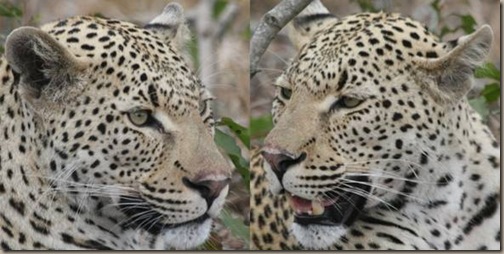
Has been seen often in the West since November 2009, now mostly north of the river Was first called Mombosa Male

Spots: 3:4
Born: Jan 2008
Mother: Kikelezi/Xidulu female of Mala Mala/Londolozi
Father: Camp Pan Male
Metsi 3:3 Son
Still dependant

Spots: 3:3 (1:1 between whisker line)
Born: May 2010
Mother: Metsi
Father: Tegwaan
Metsi 3:4 Son
Still dependant

Spots: 3:4 (1 spot between left whisker line)
Born: May 2010
Mother: Metsi
Father: Tegwaan
Bushlodge/Balabas Male
Moved into western sector from Sabi Sabi in March 2011

Spots: 2:4
Born: Nov 2007
Mother: Warthog Wallow Female
Son Of Tai Dam

Not seen since independence but could still be in NW corner
Spots: 1:1 (2 spots between whisker line each side)
Born: Mid – Late 2009
Mother: Tai Dam
Father: Tegwaan
Photos By: JF Poudron; L Pearson; R Vamplew; R Brightman
Tuesday, March 8, 2011
Latest Rangers News
March has crept up on us suddenly following a dry February; we are still expecting a bit more rain before the dry season starts in full. Last season the rains only ended in April. March usually is the last month that we see many of our migratory birds as they start their journey back north to various locations in Africa and Eurasia; it is also the month in which the impala rut begins. The impala’s breeding season is triggered by the equinox and lasts until the solstice in June, characterised by fierce battles between the many males for the right to occupy a territory the days and nights ring out with the roars of these usually quiet and peaceful antelope.
In the newsletter last month I reported that the female leopard Mabirri had been injured close to the lodge, it was hoped that since she had survived as a youngster after injuring the same foot she may be able to do so again, sadly since then her brave story has ended. She managed to carry her injury well but her survival instincts led her to the easy prey of the chickens and goats in the community adjacent to the reserve. Teams were sent out to try to catch her in order to assess her injury and to remove her from the vicinity of people but she managed to elude the tracking teams and refused to take the bait in the capture cages.
She was eventually spotted back inside the reserve and it was hoped she would stay around long enough to be darted but again she went outside to the village to feed. The next time she was spotted, it was again inside the reserve but right against the fence, the Sabi sand team were the ones who found her and the general assessment of her condition was not good. In front of the team, she again attempted to jump the fence into the village and reluctantly a decision was made to put her down, not only for the safety of the community but to end her suffering too. RIP Mabirri, you live on in our memories and the many photographs and videos that were taken during your life. Rudi has written a more complete story of her life that can be found here.
Mabirri’s passing is not all bad news, it means that her daughter Tlangisa inherits an unoccupied territory, and with Hlab’nkunzi shifting more to the east, Metsi (Mabirri’s older daughter) also has a bigger area to roam with her two sons. As these three females adjust to the new dynamics around their territories it may also mean that the Xikavi female will be seen more to the north of the lodge and our overall leopard sightings will not be affected.
All three of those females were seen regularly; Hlab’nkunzi seems to have taken up permanent residence in Makubela’s old territory and is often seen in or around the lodge. Her one remaining cub was left to herself close to the lodge area for quite a while and was seen frequently one sighting of her saw her killing a guinea fowl within earshot of the lodge, unfortunately there were lions close to the lodge and they came over to investigate and chased the youngster up a tree. During the time the youngster was alone Hlab’nkunzi was seen in the company of the Xinzele male ( who killed the other cub a few weeks earlier) and we were left wondering if the remaining cub had been left to an early independence – 13 months old being not all that unusual an age to be left alone. After a sighting of the Kashane male leopard close to the lodge and a long absence of sightings of the young leopard we began to wonder if she was still alive, but a couple of days ago mother and daughter were seen together on an impala kill at Ebony dam, just to the north-west of the lodge.
Metsi and her two sons were seen on a number of occasions and it seems she has not yet started to move into the central part of the reserve, most of the sightings of her were not far from the western boundary. A couple of times there were kills, one was unidentified, and the other was a scrub-hare caught by one of the youngsters.
One female we hardly see is the Dam 3 female as she is quite shy most of the time. This month we were lucky enough to see her mating with the Xinzele male out in the open in one of the dry watercourses that feeds the Sand River. She was unfazed by the vehicles and the courting couple performed a couple of times before Xinzele got tired and started to refuse the female’s advances, for this he got a big smack and the two moved into the undergrowth on the riverbank.
Kashane male was seen a few times in the areas to the south of the lodge, most recently Promise saw him interacting with the male cheetah Makumisa, the two spotted cats were racing across a clearing, needless to say, the cheetah won!
On the subject of cheetahs: We were lucky enough to have a coalition of three male cheetah move into our traversing area for a couple of weeks, at first they were quite shy with the vehicles but after a few days we were able to view them closely, they were seen hunting, climbing, feeding etc. very entertaining! One very interesting interaction was between these three males and the short-tailed Ximunghwe lioness: the lioness was moving towards her den site when she noticed the three cheetahs on the edge of a clearing, she proceeded to stalk them, and the cheetah noticed her approach and ran off. This is where most would expect the story to end but it continued further: as the lioness scouted around for scent one of the cheetahs started to walk up behind her, getting very close before she noticed, more running around followed and the situation repeated itself a few times before it got too dark to watch anymore!
Moving on to the Ximunghwe pride - the pride is in a rebuilding phase now that the Mapogo male coalition seems settled again. the two cubs belonging to the older female are doing well and two other litters have been spotted – the short-tailed female has two cubs in the region of 6-8 weeks old and one of the other females was found with 4 tiny cubs that at the time were 2-3 weeks old. The smallest cubs were seen with two of the big males in attendance although the mother did not let them get too close.
The three remaining males of the Mapogo coalition have been very happy to stay within our traversing area, rarely venturing east for more than a few hours; however, the male who many know as Mr.T due to his Mohawk styled mane suddenly decided to go on holiday recently. One evening he got up and left the other two males, heading straight east, a few days later he was reported as being up in the northern Sabi Sands where he used to spend most of his time before being chased off by the Majingalane males that moved up there last year. About a week passed after that report before he returned to our area having managed to elude the new males up north. During that time, it was reported that he had killed and eaten a baby giraffe. His brothers did not go without food as they shared a buffalo kill with the Ximunghwe pride (including the two oldest cubs).
The Ottawa pride were seen a number of times, mostly north of the river, they continue to look healthy and successful; the two young males in the pride are developing rapidly. The pride was seen in the company of one of the Mapogo males (Makulu, the oldest) and he was very relaxed with his heirs, in fact all three males were seen lying together at one point, the older male did become a bit aggressive as he started to feed on a huge leopard tortoise but this is usual for lions.
The elephant sightings have been phenomenal with herds all over the area as well as some impressive bulls; the fruit of the Marula trees has continued to provide an attraction to these huge creatures as well as providing us with great opportunities to watch their behaviour and interactions.
The buffalo herd was most often spotted in or around the dams or waterholes cooling off and quenching their thirst on the hot days. Many older bulls (dagga boys) were also spotted – one small group was regularly close to the lodge and often seen in Scotia or Ebony Dams.
The wild dog pack was seen on a number of occasions and Promise was lucky enough to see them take down an impala close to his vehicle a couple of days ago. One member of the pack managed to get itself caught in an old wire snare. After a long search it was located, darted and the snare removed with no harm to the animal and the pack reunited happily soon after.
As always there is more drama and excitement expected in the coming weeks, you can keep up to date with everything by following our Facebook and Twitter feeds, and you can see videos of the recent sightings posted on Youtube.
Best wishes,
Rob the Ranger
In the newsletter last month I reported that the female leopard Mabirri had been injured close to the lodge, it was hoped that since she had survived as a youngster after injuring the same foot she may be able to do so again, sadly since then her brave story has ended. She managed to carry her injury well but her survival instincts led her to the easy prey of the chickens and goats in the community adjacent to the reserve. Teams were sent out to try to catch her in order to assess her injury and to remove her from the vicinity of people but she managed to elude the tracking teams and refused to take the bait in the capture cages.
She was eventually spotted back inside the reserve and it was hoped she would stay around long enough to be darted but again she went outside to the village to feed. The next time she was spotted, it was again inside the reserve but right against the fence, the Sabi sand team were the ones who found her and the general assessment of her condition was not good. In front of the team, she again attempted to jump the fence into the village and reluctantly a decision was made to put her down, not only for the safety of the community but to end her suffering too. RIP Mabirri, you live on in our memories and the many photographs and videos that were taken during your life. Rudi has written a more complete story of her life that can be found here.
Mabirri’s passing is not all bad news, it means that her daughter Tlangisa inherits an unoccupied territory, and with Hlab’nkunzi shifting more to the east, Metsi (Mabirri’s older daughter) also has a bigger area to roam with her two sons. As these three females adjust to the new dynamics around their territories it may also mean that the Xikavi female will be seen more to the north of the lodge and our overall leopard sightings will not be affected.
All three of those females were seen regularly; Hlab’nkunzi seems to have taken up permanent residence in Makubela’s old territory and is often seen in or around the lodge. Her one remaining cub was left to herself close to the lodge area for quite a while and was seen frequently one sighting of her saw her killing a guinea fowl within earshot of the lodge, unfortunately there were lions close to the lodge and they came over to investigate and chased the youngster up a tree. During the time the youngster was alone Hlab’nkunzi was seen in the company of the Xinzele male ( who killed the other cub a few weeks earlier) and we were left wondering if the remaining cub had been left to an early independence – 13 months old being not all that unusual an age to be left alone. After a sighting of the Kashane male leopard close to the lodge and a long absence of sightings of the young leopard we began to wonder if she was still alive, but a couple of days ago mother and daughter were seen together on an impala kill at Ebony dam, just to the north-west of the lodge.
Metsi and her two sons were seen on a number of occasions and it seems she has not yet started to move into the central part of the reserve, most of the sightings of her were not far from the western boundary. A couple of times there were kills, one was unidentified, and the other was a scrub-hare caught by one of the youngsters.
One female we hardly see is the Dam 3 female as she is quite shy most of the time. This month we were lucky enough to see her mating with the Xinzele male out in the open in one of the dry watercourses that feeds the Sand River. She was unfazed by the vehicles and the courting couple performed a couple of times before Xinzele got tired and started to refuse the female’s advances, for this he got a big smack and the two moved into the undergrowth on the riverbank.
Kashane male was seen a few times in the areas to the south of the lodge, most recently Promise saw him interacting with the male cheetah Makumisa, the two spotted cats were racing across a clearing, needless to say, the cheetah won!
On the subject of cheetahs: We were lucky enough to have a coalition of three male cheetah move into our traversing area for a couple of weeks, at first they were quite shy with the vehicles but after a few days we were able to view them closely, they were seen hunting, climbing, feeding etc. very entertaining! One very interesting interaction was between these three males and the short-tailed Ximunghwe lioness: the lioness was moving towards her den site when she noticed the three cheetahs on the edge of a clearing, she proceeded to stalk them, and the cheetah noticed her approach and ran off. This is where most would expect the story to end but it continued further: as the lioness scouted around for scent one of the cheetahs started to walk up behind her, getting very close before she noticed, more running around followed and the situation repeated itself a few times before it got too dark to watch anymore!
Moving on to the Ximunghwe pride - the pride is in a rebuilding phase now that the Mapogo male coalition seems settled again. the two cubs belonging to the older female are doing well and two other litters have been spotted – the short-tailed female has two cubs in the region of 6-8 weeks old and one of the other females was found with 4 tiny cubs that at the time were 2-3 weeks old. The smallest cubs were seen with two of the big males in attendance although the mother did not let them get too close.
The three remaining males of the Mapogo coalition have been very happy to stay within our traversing area, rarely venturing east for more than a few hours; however, the male who many know as Mr.T due to his Mohawk styled mane suddenly decided to go on holiday recently. One evening he got up and left the other two males, heading straight east, a few days later he was reported as being up in the northern Sabi Sands where he used to spend most of his time before being chased off by the Majingalane males that moved up there last year. About a week passed after that report before he returned to our area having managed to elude the new males up north. During that time, it was reported that he had killed and eaten a baby giraffe. His brothers did not go without food as they shared a buffalo kill with the Ximunghwe pride (including the two oldest cubs).
The Ottawa pride were seen a number of times, mostly north of the river, they continue to look healthy and successful; the two young males in the pride are developing rapidly. The pride was seen in the company of one of the Mapogo males (Makulu, the oldest) and he was very relaxed with his heirs, in fact all three males were seen lying together at one point, the older male did become a bit aggressive as he started to feed on a huge leopard tortoise but this is usual for lions.
The elephant sightings have been phenomenal with herds all over the area as well as some impressive bulls; the fruit of the Marula trees has continued to provide an attraction to these huge creatures as well as providing us with great opportunities to watch their behaviour and interactions.
The buffalo herd was most often spotted in or around the dams or waterholes cooling off and quenching their thirst on the hot days. Many older bulls (dagga boys) were also spotted – one small group was regularly close to the lodge and often seen in Scotia or Ebony Dams.
The wild dog pack was seen on a number of occasions and Promise was lucky enough to see them take down an impala close to his vehicle a couple of days ago. One member of the pack managed to get itself caught in an old wire snare. After a long search it was located, darted and the snare removed with no harm to the animal and the pack reunited happily soon after.
As always there is more drama and excitement expected in the coming weeks, you can keep up to date with everything by following our Facebook and Twitter feeds, and you can see videos of the recent sightings posted on Youtube.
Best wishes,
Rob the Ranger
Subscribe to:
Posts (Atom)